
A theatrical production utilizing live audio and visual reenactment along with fine quality pictorial images capturing the history of prayer from ancient times by Japanese Women from Ancient Times.
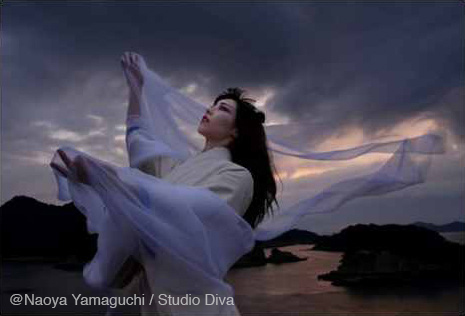
According to the oldest myth in Japan, a Goddess named “Amaterasu” had shone light on Japan and led the country as the Goddess of the Sun from ancient times. The world was at peace for an extensive period of time. It is a rare case in all of world history that The Sun God was a woman like Amaterasu.
It has been said that the original Japanese culture was started during the Jomon Period, lasting from around 15,000 years ago until about BC 1,000 years. The Period lasted more than 10,000 years.
No weapons dating back to that period have been found from archaeological excavations. It seems that the Japanese were leading very peaceful lives during this time without battles for more than 10,000 years. The women in the Period wore clothes with colorful patterns and had many colorful necklaces, earrings and bracelets. It is believed that these ornaments were made by men. Given that it has been found that men had ornaments only around their waist, we can surmise that women were treated very nicely and with great respect.
Many female shaped clay figures have been discovered and it appears that they were used in prayer or religious rituals. Women were respected as spiritual entities, directly connected to the Gods and Nature.
Queen Himiko appeared early in the 3rd Century. With her psychic ability she ruled the Country according to the messages she received from the Gods and from Nature.
In Japan, the worship and respect shown toward women which began in ancient times continued uninterrupted up until the early 8th Century.
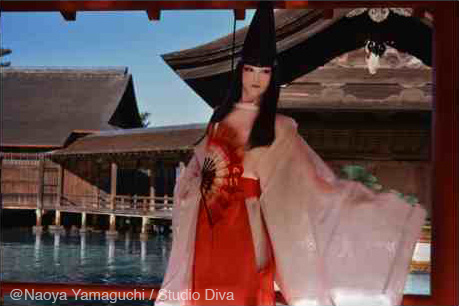
Around the 4th Century, the virtues of Confucianism from China started to affect Japan and the idea of “male chauvinism” began to spread. Disturbances and wars in the Medieval Period were followed by the Feudal Periods which ruled the Country with power. It was the time of Bushido, the ethical code of the ruling Samurai Class. This period can be called “the era of men.”
The status of women was lowered and they were regarded as belonging to men. During the period Shirabyoshi who were maidens in the service of Shinto rituals and Buddhist services, who sang and danced, appeared in the 12th Century. They offered dance and songs to the Gods and Buddha Their dancing and singing were the origin of the Japanese traditional performing arts known as Noh and Kabuki. Their performances attracted the Emperor, Nobles and Samurai, who became their lovers. However, their status was not looked down upon as they were mediums of God or Buddha and they were treated as sacred beings. It was the time of many wars and great bloodshed in Japan, and there were a lot of Shirabyoshi’s from noble families. They were girls dressed like men wearing hunting suits, Tate-Eboshi which were tall straight hats worn by court nobles, and sometimes they carried long swords.

After the Warring Periods, the Tokugawa Shogunate unified the whole of Japan and established a time of peace from the early 17th century until the mid – 19th century when the Samurai government ended.
During this peaceful time, Shirabyoshi became either Geisha who specialized devotedly in the performing arts, or they became the highest-class courtesans called “Tayu” in Kyoto and “Oiran” in Edo (Tokyo).
Geisha and Oiran are often fantasized or prejudiced by foreigners believing that they are entertainers for men or prostitutes. However there was a reason that these women had to become Geisha or Oiran, either to save their family or they were forced into it by abduction. They could not leave the Kuruwa, the place where they stayed or were held until they had finished repaying all of the debt they owed.
Not only was great beauty required, but also a very high intelligence and an excellent mastery of the Japanese traditional arts were necessary to become an Oiran.
Oiran enjoyed and competed for their gorgeous fashion. They were the fashion leaders and were idols who represented “Iki”, the aesthetic and moral ideals of urban commoners. Iki means “high spirit” or “high heart.” It referred to the way in which a high-spirited person talked, behaved, or dressed. Iki also has a sensual and elegant connotation when it is applied to the description of a woman. A woman with plenty of iki in her heart is high-spirited and graceful in her conduct, always willing to sacrifice herself for the man she loved. This behavior, on the other hand, sometimes indicated resignation and consequently a sense of sadness and loneliness emerged. Despite her gorgeousness on the surface, Oiran carried the sorrow that they could not get out of the Kuruwa freely.
Only the highly ranked Samurai could interact with them. Because their conversations with them sometimes touched upon highly political secrets, they were banned from interacting with outside people. However, when they fell in love with one of their confidants seriously, they suffered from the reality that they could not be with the man as they wished because of their restricted circumstances. Oirans were very religious and prayed hard to the Amida Buddha, praying that they could have a free life when they were reborn.
Song「Amida Buddha」
Song「Devotion」
After the Shogunate regime ended in the 19th century, Japan promoted industrialization and Japan experienced wars. Women prayed for the safety of their loved ones during this very difficult time. At the end of the wars, Japanese women were able again to restore their equal status with men.
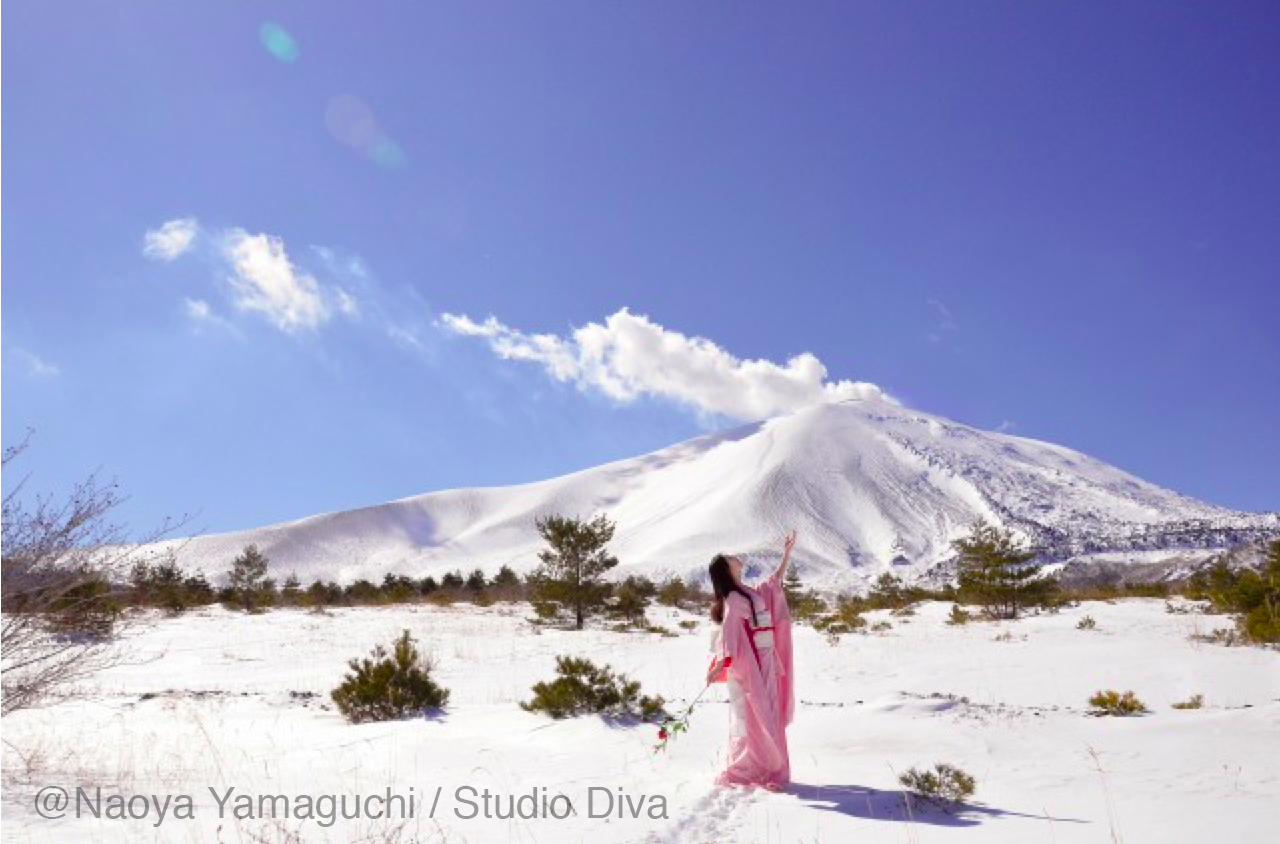
Japanese Women were worshipped as sacred entities from the Jomon era until the early eighth century. It is said that it is the Era of Peace. The prayer of women it is said sometimes has the power to control the country. Even though the status of women was lower than men, still their prayers in dance and song were highly regarded and became the origin of Japanese Culture.
Throughout the long Japanese history, the length of time when Japanese women were forced to live under the dominance of men was about 1,500 years, which represents ten percent of the 15,000 year history. During the 1,500 years women cried a lot and prayed fervently for happiness.
So the prayers offered by Japanese Women for being happy together with their loved ones is a universal prayer made by all women throughout the World. Only when there is peace in the world can men and women be equal, where everybody has the right to be free in order to live a happy life. In concluding this artistic performance we offer the Prayer for Peace.
「Forever Temple Light」
There is an eternal light which has been burning continuously for 1,200 years at the mountain temple in Kyoto, one of the original places where Buddhism was established in Japan. The monks never failed to keep the light burning through wars and natural disasters throughout history. The Olympic flame is a symbol of peace which connects the hearts of people all over the world. Just like the Olympic flame, we feel that the eternal temple light in Kyoto also symbolizes our hope and desire for peace. Now we pray for it in our sacred song, “Forever Temple Light.”
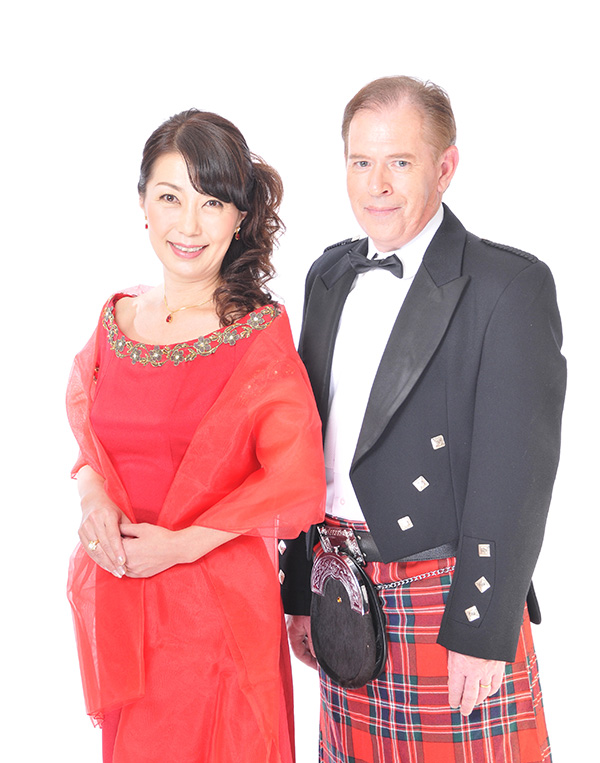
We started the activity of DreamQuest in the hope that we can connect people’s hearts with music and arts. We pray that everybody throughout the world can become happy, respect each other’s differences and have the opportunity to realize their personal dreams. We believe that we can be connected with the power of unconditional love which everyone has at the bottom of their heart, even though we have different cultures and religious backgrounds.
In order to create such a world, we would like to suggest a way to accomplish this using the theme of this show, which is the power of prayer by women. That is, we should enable the feminine energy that is inherently a part of men and women to bloom. We see this energy exhibited by men when they genuinely show their love to their loved ones. In the present world our lives are governed by a male energy which is represented by the concept of dominant power and competition. Because of this many people hurt each other and live in the world under exclusive boundaries that causes so much stress, fear and unpleasantness.
If we can activate more of our inherent feminine energy, which nurtures life and caring for each other, we would be connected more deeply. Creating a peaceful world is difficult, however it is important for us not to give up hope, in addition to continuing to pray we also need to take positive steps in our personal lives. We cannot expect others to change if we do not show a positive aspect of change within ourselves.
Reference:
「“Key to the Japanese Heart and Soul” (1996) Kohdannsha International.
wikipedia : ja.wikipedia.org/wiki/
Copyright:Naoya Yamaguchi & Kumiko Kajitani